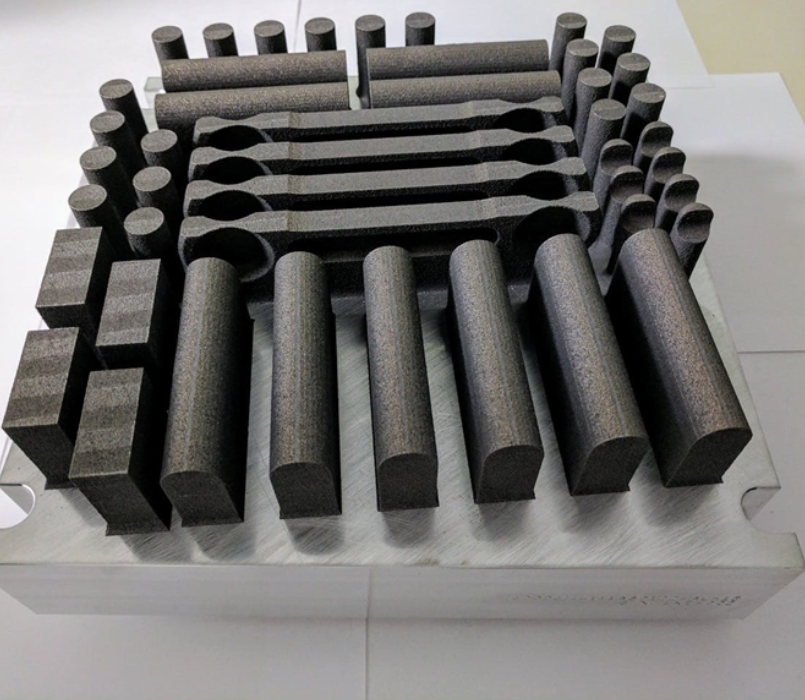
Powder metallurgy (PM) is a precise manufacturing technique that involves blending fine metal powders, compressing them into intricate shapes, and sintering under controlled temperatures to produce highly dense, durable components. This process offers exceptional flexibility in material design and part geometry, enabling the creation of components with minimal material waste and complex forms that would be difficult or costly to produce using traditional subtractive methods. Metal-ceramic composites leverage powder metallurgy by combining metallic matrices with ceramic reinforcements such as tungsten carbide or titanium carbide. This fusion delivers materials with superior wear resistance, hardness, and thermal stability while retaining the toughness and ductility of metals. Such composites are especially advantageous in applications involving abrasive materials, high temperatures, and corrosive environments. Due to these unique properties, powder metallurgy and metal-ceramic composites are widely utilized in manufacturing pelletizer die plates, cutting knives, and other industrial parts critical for efficient pelletizing operations. These components benefit from the enhanced longevity, reduced maintenance, and improved operational reliability achieved through this technology.
Key Benefits at a Glance
Efficient Production: Near-net shape manufacturing minimizes machining needs, reduces material wastage, and lowers production costs. This efficiency is paramount for high-volume and precision parts.
Enhanced Durability: The metal-ceramic composites provide a balanced combination of metal toughness and ceramic hardness, significantly increasing resistance to abrasion and mechanical wear.
Tailored Microstructure: PM processes enable precise control over the size and distribution of grains, phases, and porosity within the material, optimizing the balance between strength and toughness.
Improved Performance: Components demonstrate superior fatigue life and thermal stability, maintaining their integrity under cyclic loads and harsh operating conditions, which translates to longer service intervals and better process uptime.
Select the fields to be shown. Others will be hidden. Drag and drop to rearrange the order.